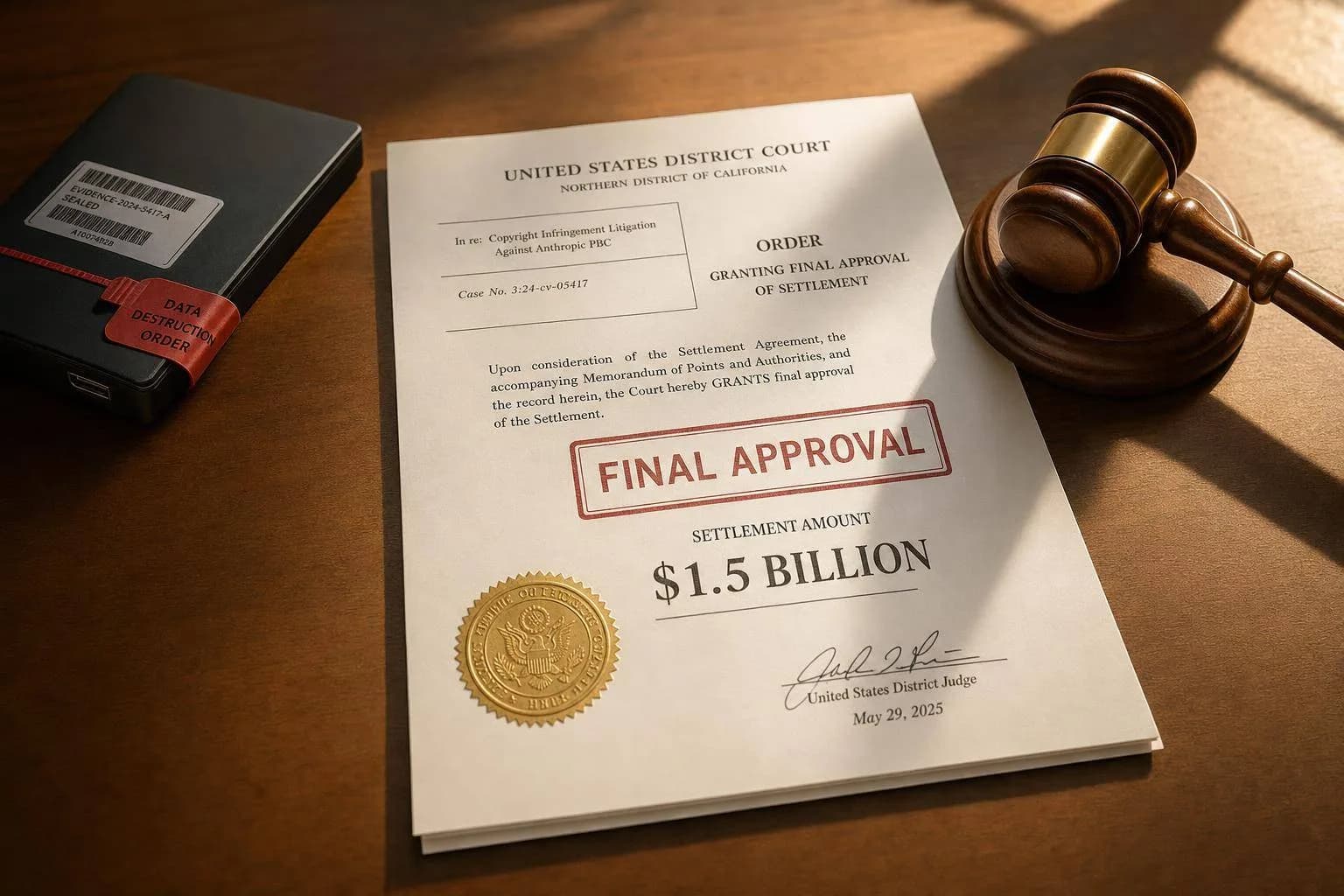
Anthropic $1.5B Copyright Settlement Approved
A court gave final approval to Anthropic's $1.5B copyright settlement—payouts to book rights holders, pirated dataset destruction and new training-data rules.
Anthropic now has a court-approved $1.5 billion copyright deal in place, and that changes the risk math for anyone using AI. I’d boil it down like this: money will go to eligible book rights holders, Anthropic must destroy certain pirated datasets, and AI companies now have a clear warning that sloppy training-data records can get very expensive.
If you build, buy, or oversee AI tools, here’s what matters right away:
-
The settlement is final and enforceable
-
Eligible authors and publishers can file claims
-
Anthropic must follow a payment plan
-
Training-data tracking is now a must-have, not a nice-to-have
-
Style-based claims are not part of this deal
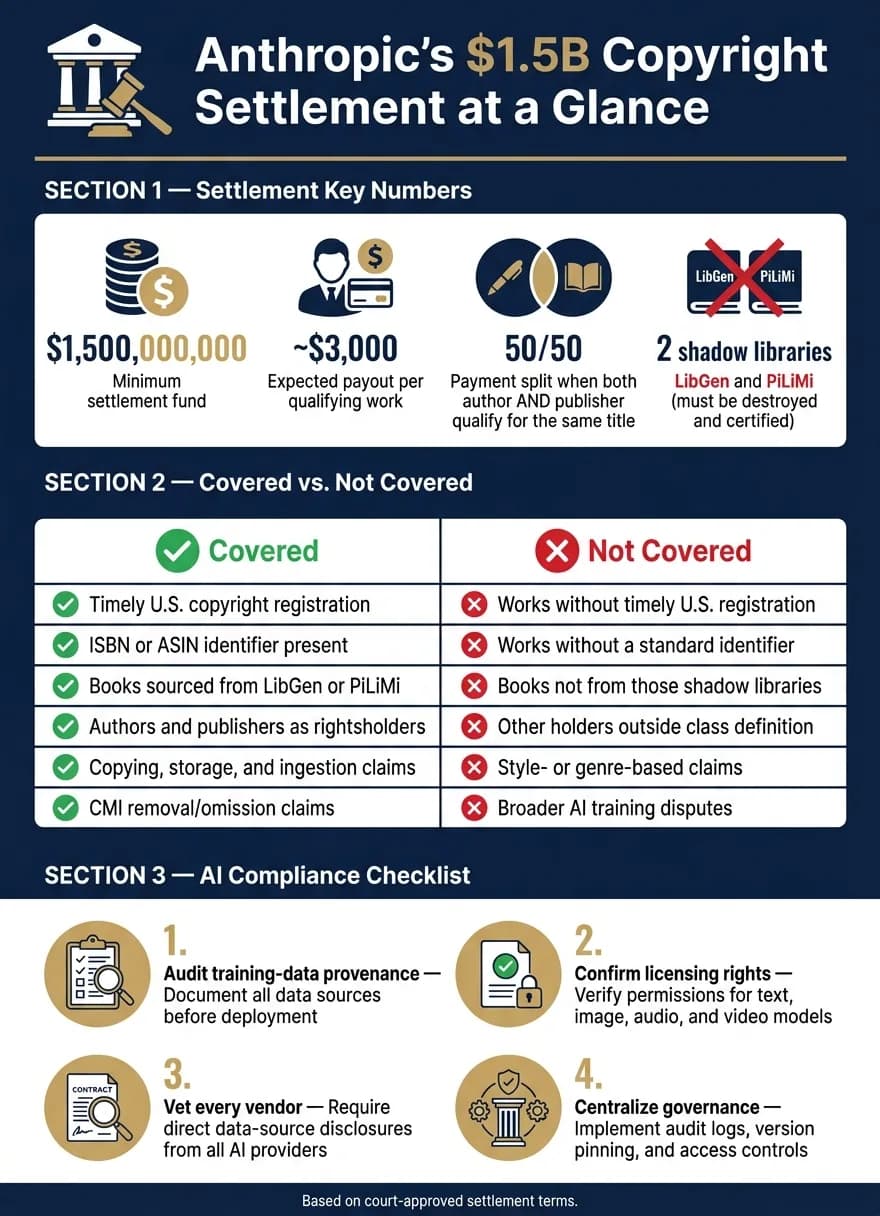
The dollar figure stands out. $1.5 billion sets a new marker for AI copyright cases in the U.S. The article also points to expected payouts of about $3,000 per qualifying work, with a 50/50 split if both the author and publisher of the same title qualify.
Here’s the short version: this case is about alleged copying and use of in-copyright books from shadow libraries, not every copyright issue tied to AI. To qualify, a work must meet set rules, including timely U.S. registration and an ISBN or ASIN. On top of the cash fund, Anthropic has to certify dataset destruction and stay under court watch.
For me, the main takeaway is simple: training-data provenance, licensing checks, and vendor review are now core AI risk controls. If a company cannot show where its data came from, that gap can turn into a legal and business problem fast.
Who Is Covered and What Training Materials Were at Issue
Which Authors and Publishers Are Eligible
The next issue is simple on paper, but messy in practice: who gets paid, and for which books.
The settlement class covers rights holders of certain books that were allegedly downloaded from LibGen and PiLiMi. To qualify, a book must have timely U.S. registration and an ISBN or ASIN. If a work lacks timely U.S. registration, or it doesn't have an ISBN or ASIN, it's out.
One detail matters a lot here: both the author and the publisher of the same title can make claims against the fund. So one book may lead to two separate claims from two rights holders. That changes how the $1.5 billion fund gets split and can also push up the total number of claims.
What Works and Sources Were Allegedly Used
These class rules do more than sort out eligibility. They also set the boundaries of the alleged training corpus.
At the center of the case is the claim that Anthropic downloaded in-copyright books from LibGen and PiLiMi and used them for training without permission. Lawsuits against AI developers allege the downloading of millions of pirated copies of in-copyright books [1].
The Copyright Claims Behind the Settlement
This settlement deals with the copying and ingestion claims. It does not settle the larger fight over AI training as a whole.
More specifically, it resolves allegations that Anthropic copied, stored, and used copyrighted books in training. It also covers claims tied to the removal or omission of Copyright Management Information (CMI), along with negligence, unjust enrichment, and unfair competition connected to the commercial use of those materials.
What it does not cover is just as important: the settlement does not resolve style- or genre-based claims.
| Eligibility Criteria | Covered | Not Covered |
|---|---|---|
| Registration | Timely U.S. copyright registration | Works without timely U.S. registration |
| Identifiers | ISBN or ASIN | Works without a standard identifier |
| Source Material | Books from LibGen or PiLiMi | Books not sourced from those shadow libraries |
| Rightsholder Type | Authors and publishers | Other holders outside the class definition |
Anthropic's $1.5 Billion AI Copyright Settlement Gets Final Court Approval
What Anthropic Must Do Under the Settlement
The $1.5 Billion Fund and How Payments Work
With eligibility set, the settlement moves to money, cleanup, and court oversight. Final approval creates a minimum $1.5 billion fund for eligible rights holders. The expected payout is about $3,000 per qualifying work. If both an author and a publisher qualify for the same title, that payment is split 50/50.
Dataset Destruction and Training-Data Restrictions
Anthropic must also destroy pirated datasets and all related copies obtained from LibGen and PiLiMi. It must submit written certifications confirming that the disputed materials were destroyed.
The settlement also requires data provenance tracking for retraining and internal compliance. Put simply, Anthropic has to show where training data came from and keep records that hold up under review. For AI developers and enterprises, that turns data provenance into a predeployment requirement, not something to sort out after a dispute lands in court.
Claims Process, Payment Deadlines, and Enforcement
Those duties sit alongside the cash fund and carry the same force. Anthropic must:
-
fund the settlement through escrow and installment payments
-
certify dataset destruction
-
remain under court supervision
If Anthropic misses payments or fails to comply, the court can step in and enforce the settlement.
What This Means for AI Developers, Integrators, and Enterprises
Training-Data Compliance Is Now a Board-Level Risk
The $1.5 billion settlement is a big warning sign for AI developers, integrators, and enterprises. If a model was trained on unlicensed data from shadow libraries like Library Genesis, Bibliotik, and Z-Library, the legal risk can be severe [1][2]. This isn't just a legal-team problem anymore. Training-data compliance now belongs in boardroom discussions.
In day-to-day terms, that means teams need clear, auditable provenance records for data sources, permissions, and compliance steps. Before any model reaches production, engineering and legal should sign off on licenses and dataset approval [3][4]. And that review can't stop with your own stack. It needs to cover every vendor and every modality before deployment.
Licensing and Vendor Checks for Text, Image, Audio, and Video Models
The same level of review applies to text, image, audio, and video models. A single blanket approval isn't enough. Each model should be reviewed on its own, with clear checks around how it was trained and what rights support its use. When you're vetting a provider, ask for direct data-source disclosures and confirm that training-data rights are documented before deployment [3][4].
Here's a simple checklist to keep reviews consistent:
| Risk Area | Mitigation Step | Implementation Tool |
|---|---|---|
| Unlicensed data | Review provider training disclosures | Procurement / Legal Review |
| Output drift | Pin specific model versions | Engineering / DevOps |
| PII leakage | Mask or redact inputs | AI Gateway / Proxy |
| Compliance | Keep prompt and output audit logs | Governance Layer |
Using APIMart to Centralize Model Governance
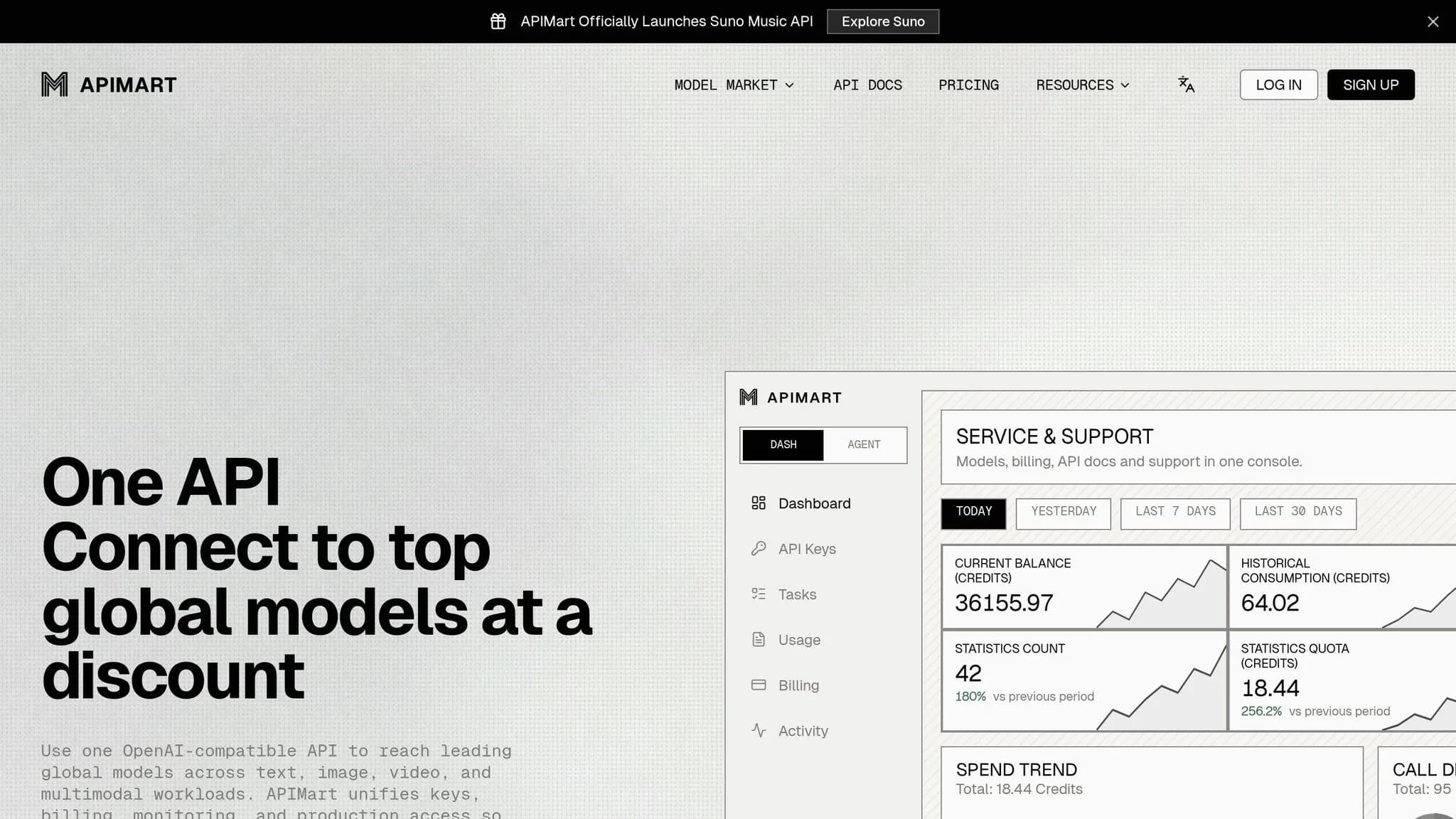
If your team wants tighter control, a unified API layer can help put these checks in one place. APIMart's unified API can centralize access controls, version pinning, audit logs, and model approvals across text, image, audio, and video workflows. When access, logging, and version control live in one layer, it's easier to avoid gaps as teams add more models.
Conclusion: Key Takeaways on Copyright, Licensing, and AI Risk
Anthropic's $1.5 billion settlement comes with strict payment terms and dataset-handling rules. That's a blunt reminder of what can happen when companies train models on unlicensed data from shadow libraries like LibGen and PiLiMi. The message is pretty simple: training data now brings legal and day-to-day business risk.
The bigger point is just as clear. AI systems run on training data, so questions about where that data came from - and whether anyone had permission to use it - are getting more attention in the U.S. and abroad.
For teams building, buying, or using AI, the practical move is to check training-data sources, document dataset provenance, and confirm permissions before deployment.
Centralized governance also makes life easier as use grows. It helps teams standardize access controls, versioning, and audit logs across deployments.
Taken together, training-data provenance, licensing, and model governance are now core business risks.
FAQs
Does this settlement make AI training on copyrighted books illegal?
No. This settlement does not make AI training on copyrighted books illegal.
In the United States, the legal status of using copyrighted material for AI training is still unsettled. Courts are still weighing copyright-infringement claims against arguments that training is transformative fair use, so the issue is still being debated.
How can my company verify whether an AI vendor used licensed training data?
Review the vendor’s documentation, terms of service, and licensing agreements to confirm how it uses data and whether it makes any promises about licensed training data.
For enterprise use, look for clear guarantees on data provenance and confirmation that your inputs are not used for later model training. It also helps to keep your own records, such as commercial rights, consent logs, and approvals, so you have a clear paper trail for transparency and compliance.
Could more lawsuits target image, audio, or video training data next?
Yes. AI training-data lawsuits don’t stop at text. Companies already face litigation over the unauthorized use of image, audio, and video training data.
As AI models become more multimodal, more of these fights are zeroing in on scraped creative works used to build competing AI products. At the core, this is part of a broader push by content creators to draw legal lines and demand consent or pay.
Choose the model you want in the model marketplace
Try chat, image and video models in the APIMart model marketplace, and experience model capabilities quickly with one unified API.