AI Upselling Algorithms for Ecommerce Teams
Learn how recommendation systems and predictive models help ecommerce teams deliver personalized upsell offers, improve AOV, and protect customer data.
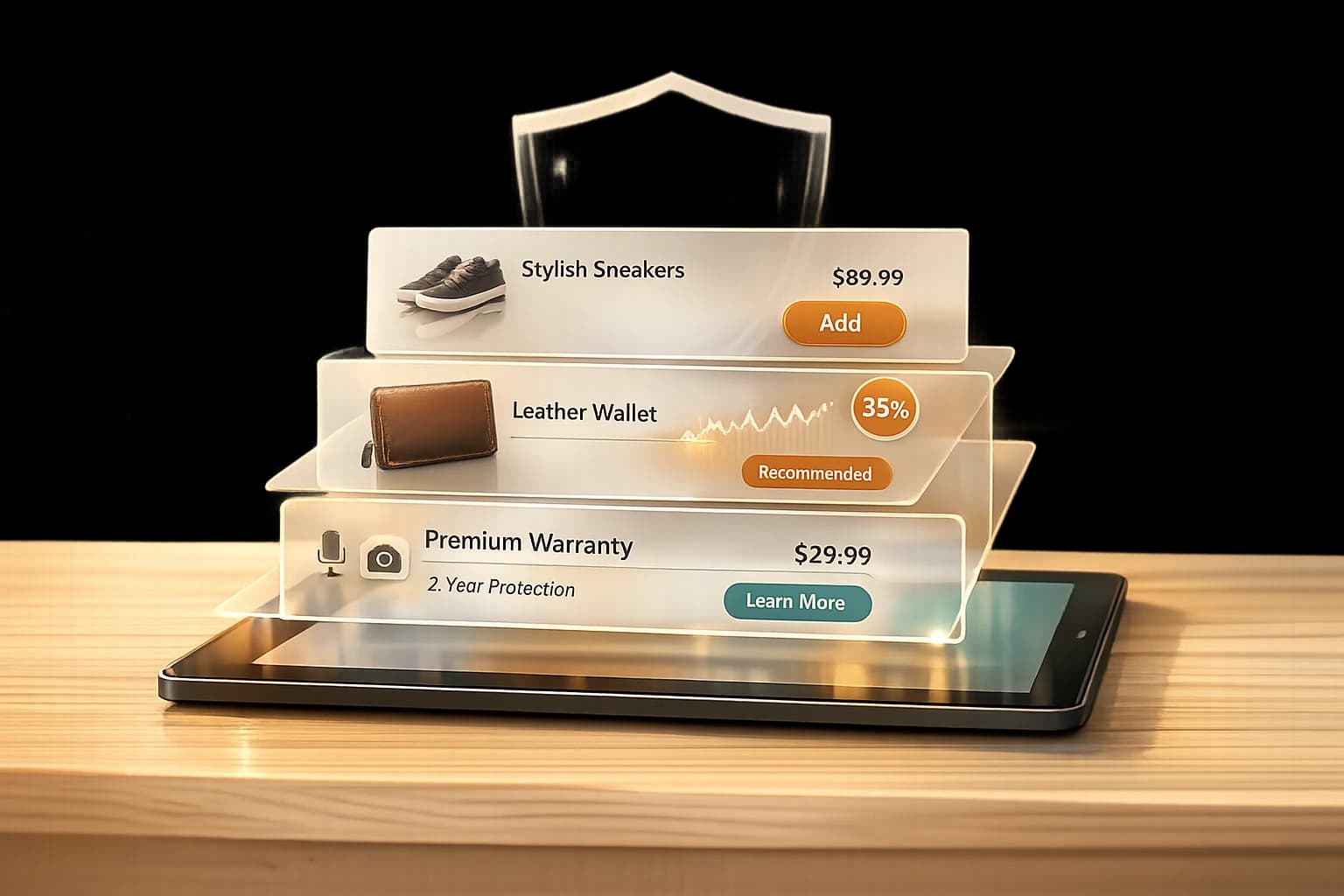
AI is transforming upselling in e-commerce. By using customer-specific data like browsing history and purchase behavior, businesses can suggest tailored upgrades or complementary products at the perfect moment. Here's why it works:
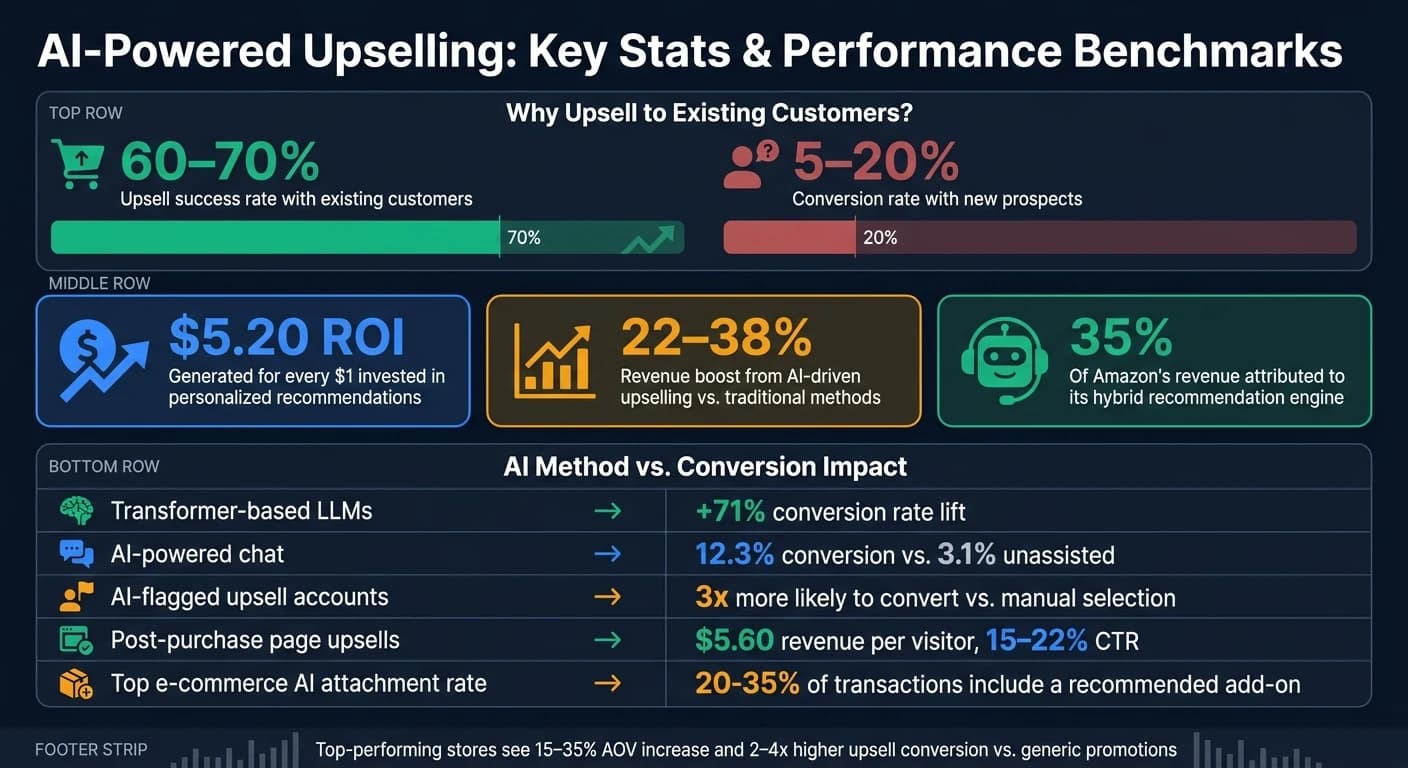
- Upselling Success Rates: Selling to existing customers succeeds 60–70% of the time, compared to just 5–20% for new prospects.
- Revenue Impact: AI-driven upselling can boost revenue by 22–38%, far outperforming traditional methods.
- Cost Efficiency: Personalized recommendations generate $5.20 for every $1 invested.
AI tools like recommendation systems, predictive models, and multi-modal APIs analyze customer behavior to optimize timing, messaging, and product selection. Platforms such as APIMart simplify integration by providing access to 500+ AI models through a single API, making it easier for businesses to implement real-time, personalized upsell strategies.
The key to success lies in using high-quality data, aligning AI recommendations with customer needs, and ensuring privacy compliance. This guide explores the algorithms, tools, and best practices you need to get started.
Core AI Algorithms Used in Personalized Upselling
How Recommendation Systems Work
Upselling engines typically rely on three main approaches: collaborative filtering, content-based filtering, or a hybrid of both.
Collaborative filtering identifies patterns in user behavior, either by grouping shoppers with similar habits or by spotting items often purchased together. For large-scale e-commerce platforms, item-to-item collaborative filtering works well, especially for customers who shop infrequently. On the other hand, content-based filtering focuses on product attributes - like material, price range, or category - and recommends items similar to those a customer has interacted with. This approach is particularly effective for niche markets or newer stores that lack extensive purchase history.
A hybrid model blends these two methods, addressing challenges like the "cold start" problem, which occurs when new products lack sufficient transaction data for collaborative filtering. A standout example is Amazon, whose recommendation engine - a hybrid system - has been credited with driving 35% of its revenue [8].
These systems don’t just suggest products; they also predict the best timing for upselling, which we’ll explore next.
Predictive Models for Customer Behavior
Building on recommendation systems, predictive models pinpoint the ideal moment to upsell. Techniques like XGBoost, Logistic Regression, and Random Forests analyze purchase history and browsing behavior to calculate a propensity score, indicating a customer's likelihood to buy. Meanwhile, sequence models such as RNNs and LSTMs help predict when a customer is most receptive to an upsell [9][4]. For example, customers who reach a plan limit are 3x more likely to convert compared to those selected manually [4].
A real-world success story: During the 2022 tax season, TurboTax used real-time machine learning to deliver premium upsell offers, generating an impressive $50 million in additional revenue [9].
Natural Language and Multi-Modal Models
To complement predictive timing, natural language and multi-modal models craft highly personalized, context-aware upsell offers.
Large language models (LLMs) excel at interpreting ambiguous search queries and creating natural-language upsell prompts that align with a customer’s intent. Transformer-based LLMs have been shown to boost conversion rates by 71% thanks to their ability to understand context [10]. Additionally, AI-powered chat systems increase conversion rates to 12.3%, compared to just 3.1% for unassisted interactions, while also raising session spending by 25% [10].
Multi-modal models take personalization a step further by integrating text, image, and voice inputs simultaneously. For example, in 2026, HSE implemented a voice AI system capable of managing up to 3 million calls per year across 600 simultaneous conversations. This system identifies optimal moments to recommend add-ons during live calls, achieving a 10% cross-sell rate [2]. These results far surpass those of passive recommendation widgets.
"Voice carries something digital channels cannot replicate. Customers explain what they want in their own words... and an AI agent that hears those words can shape the next offer to fit." - Chris Silver, CRO, Parloa [2]
Platforms like APIMart simplify the integration of language, vision, and voice models into a single API, enabling seamless multi-channel upselling strategies.
Building a Data Foundation for AI-Driven Upselling
Key Data Sources for Upselling Models
When it comes to AI-powered upselling, the quality of your results hinges on the data you provide. Even the smartest algorithms can't make up for gaps or inconsistencies in your inputs.
Here are the most critical data sources:
- Transactional data: This includes purchase history, price range preferences, and brand loyalty, offering insights into a customer's established habits.
- Behavioral signals: Real-time browsing behavior, cart contents, search terms, and email interactions reveal what the customer is actively interested in.
- Product catalog metadata: Information like category, price, color, material, and live inventory ensures recommendations are both relevant and available.
- CRM and service history: Details such as loyalty program status, account age, and open support tickets provide a complete customer profile.
A great example of this in action is Decathlon's AI program. It identifies 74% of customers by order number across over 500,000 yearly interactions. This gives their AI tool access to a full customer profile before making any upsell recommendation [2].
Once you've identified the right data sources, the next step is to organize and prepare that data for effective AI processing.
How to Prepare Data for AI Models
To improve the accuracy of upsell predictions, start by unifying customer information across platforms like your CRM, e-commerce system, POS, and support logs. This ensures a single customer isn't mistakenly treated as multiple individuals.
Next, consider using RFM analysis. This method scores customers based on:
- Recency: How recently they made a purchase.
- Frequency: How often they buy.
- Monetary value: How much they spend.
Pair these RFM scores with session-level insights, such as "engagement depth" (e.g., a customer spending over five minutes on a high-end product page). Together, these metrics help predictive models determine the best timing for upsell offers [12][4].
Two important safeguards to implement early:
-
Avoid upselling during unresolved support interactions. Offering a premium product during a complaint call can come across as indifferent or careless. As Chris Silver, CRO of Parloa, puts it:
"A duplicate recommendation for an item the customer already bought reads as carelessness. A premium add-on pitched during a complaint call reads as tone-deaf." [2]
-
Use a minimum of 6 to 12 months of purchase data. Collaborative filtering models rely on this timeframe to generate reliable recommendations [12].
Finally, ensure your dataset complies with legal and privacy regulations.
Data Privacy and Compliance Requirements
In the U.S., the California Consumer Privacy Act (CCPA) is a key regulation to consider. It mandates clear consent for behavioral tracking and gives customers the right to opt out of automated personalization. As similar laws emerge in other states, adopting privacy-first practices now can save you from future headaches.
Here’s a practical checklist to stay compliant:
- Strip personally identifiable information (PII) from training datasets.
- Honor opt-out requests promptly.
- Use frequency caps to prevent overloading customers with repeated offers.
If your business involves sensitive products like financial services, health items, or age-restricted goods, a legal review of your recommendation processes is essential [2][8].
Additionally, secure API integration is vital for real-time upselling. Live calls to backend systems for pricing and inventory checks must be protected with robust authentication, encryption, and access controls. Poorly secured endpoints can create compliance risks and erode customer trust. Platforms that handle these security measures at the API layer significantly reduce vulnerabilities.
How to Add AI Upselling to Your E-Commerce Stack
Setting Goals and Tracking the Right Metrics
When adding AI upselling to your e-commerce strategy, start by defining clear goals. Focus on metrics like Average Order Value (AOV), Revenue Per Customer (RPC), and cross-sell attachment rate (the percentage of transactions that include a recommended add-on). Top-performing e-commerce stores achieve attachment rates between 20–35% using AI-driven recommendations [1].
To establish a baseline, hand-pick 20 high-fit customer accounts and run an upsell offer manually before introducing automation. A good starting point for conversion rates is 15–25% [4]. Once the AI is active, implement A/B testing with a control group (around 20% of sessions without recommendations) for at least 60 days. This helps you measure incremental revenue - the extra income directly driven by AI recommendations [5].
Here’s a breakdown of key metrics and benchmarks to track:
| Metric | What It Measures | Target Benchmark |
|---|---|---|
| Average Order Value (AOV) | Average spend per transaction | 15–35% increase [13][14] |
| Revenue Per Customer (RPC) | Total revenue per customer over a period | 15–30% increase [1] |
| Cross-Sell Attachment Rate | % of orders including a recommended item | 20–35% [1] |
| Upsell Conversion Rate | % of offers resulting in an upgrade | 2–4x vs. generic promotions [1] |
| Upsell Conversion Rate (AI-flagged accounts) | Conversion on AI-identified accounts | 15–25% [4] |
With these metrics in place, choose AI tools designed to meet your specific goals.
Choosing and Integrating AI Capabilities
Your choice of AI tools will depend on your technical resources and expected revenue gains. No-code platforms like Pecan AI (starting at ~$950/month) or Shopify-native tools like Wiser (starting at $9/month) are quick to deploy, taking just 1–2 weeks without requiring data science expertise [4][13]. On the other hand, custom-built solutions using platforms like Vertex AI or SageMaker take 8–16 weeks to implement and require dedicated engineering teams. These are only practical if your annual upsell potential exceeds $500,000 [4].
For most mid-sized U.S. e-commerce businesses, the fastest way to see results is by using a CRM-native AI solution or a lightweight recommendation app. For example, Salesforce Einstein costs $50 per user per month and integrates directly with your existing customer data [4]. Regardless of the tool you choose, ensure it supports real-time API calls to provide accurate pricing and inventory updates. Also, align these integrations with established API security protocols.
Once your AI system is in place, shift your focus to optimizing how and where upsell offers are presented.
Designing and Testing Upsell Offers
The placement of upsell widgets is critical, as product detail and checkout pages account for over 50% of upsell revenue [5]. Post-purchase pages are especially effective, delivering $5.60 in revenue per visitor with click-through rates of 15–22%, outperforming both product pages and cart placements [7].
"AI upselling is most effective when it shifts from merely recommending 'higher-priced items' to intelligently curating 'high-relevance bundles.'" - Chetan Sheladiya, Founder, Destinova AI Labs [16]
To avoid overwhelming customers, limit recommendations to 3–4 items. Offering too many options (like 8–10) can lead to decision paralysis, reducing conversions [13][14]. On mobile, place recommendations above the fold to boost conversions by up to 40% [6]. Allow your AI model a 30-day learning period after launch to gather data, and retrain it regularly - weekly for fast-changing catalogs or monthly for more stable inventories [11][13].
Using APIMart to Power Personalized Upselling
How Unified APIs Simplify Integration
One of the biggest hurdles in AI-driven upselling is the challenge of integrating multiple models. Many businesses juggle 3–5 different AI personalization tools, and the real obstacle isn’t the technology - it’s the integration process [15]. Add to that the issues of fragmented identities and siloed data, and it’s no surprise that 68% of personalization projects fail to meet expectations before they even get off the ground [15].
APIMart tackles this problem head-on by offering a single API compatible with OpenAI, giving access to over 500 AI models. This means no more juggling separate authentication, billing, or rate-limit configurations for each provider. For mid-sized e-commerce teams, especially those without extensive data science resources, this streamlined approach can drastically shorten deployment timelines. It also sets the stage for implementing the versatile upselling strategies outlined below.
APIMart Use Cases for Upselling
APIMart’s multi-modal features open up several opportunities for enhancing upselling efforts. Here are a few ways it can be applied:
- Language models (e.g., GPT-5, Claude) can create personalized upsell messages in real time, tailoring offers based on a customer’s browsing history, cart items, or loyalty status.
- Video and multi-modal models (e.g., Sora, Kling V3) can generate short product demo videos or lifestyle images for upsell offers. These visuals, placed on post-purchase pages, can boost acceptance rates to 15–25% [3][5]. With a single API call, these models combine product images, customer data, and text prompts to deliver highly relevant bundle recommendations.
By using these tools, e-commerce teams can improve personalization across all customer touchpoints. For example, in conversational channels, language models can power chat-based upsell flows, presenting offers only after resolving service issues and ensuring the customer is in a positive mood [2].
Best Practices for Unified API Implementation
To make the most of a platform like APIMart, adopting a few operational best practices is key.
- Monitor costs actively: With per-second pricing models (e.g., Kling V3 at $0.0672/second for 720P resolution), high call volumes can lead to unexpected expenses if not closely tracked.
- Protect customer data: Avoid sending raw personally identifiable information (PII) in API requests. Instead, tokenize or hash customer identifiers to comply with consent regulations and minimize risk in case of logging or caching issues.
- Optimize response times: Aim for inference times between 50–200ms. If latency exceeds this range, upsell widgets can delay page rendering, which negatively impacts conversions more than a generic offer would [11].
These practices align with the AI-driven upsell framework discussed earlier, ensuring deployments are not only fast but also secure and effective.
"The question is no longer whether to use AI for upselling and cross-selling - it is how quickly you can get started." - Lautaro Schiaffino, CEO, Darwin AI [1]
How ISERO transformed cross- and upsell with AI: Practical B2B E-commerce success story
Conclusion: Key Takeaways for AI-Powered Upselling
AI-powered upselling is reshaping e-commerce by tailoring offers to match individual customer needs. Instead of merely promoting products, the focus shifts to understanding and predicting what a customer might genuinely want. The results speak for themselves: upselling to existing customers has a success rate of 60–70%, compared to just 5–20% for new prospects [1][4]. Even more striking, AI-personalized offers are 2–4 times more effective than generic promotions [1][5].
The foundation of this success lies in high-quality data. Customer profiles should integrate seamlessly across CRM systems, purchase histories, and behavioral insights. As Chris Silver, CRO at Parloa, explains:
"The retailers seeing strong personalization results are the ones whose systems agree on who the customer is, what they have bought, and what they have already heard." [2]
Certain touchpoints consistently deliver strong results. For example, post-purchase pages achieve acceptance rates of 15–25% [3], while product detail pages contribute up to 31% of recommendation revenue [5]. Prioritizing these areas before branching into email, SMS, or conversational channels ensures measurable returns.
That said, the technical side of implementation can be a major hurdle. Often, the complexity of integration - not the AI itself - becomes the bottleneck. Platforms like APIMart simplify this process by offering access to over 500 models through a single API. This allows teams to deploy everything from personalized messaging to video-based upsell content without managing multiple vendors or authentication systems.
"When done right, AI-powered upselling does not feel like selling at all - it feels like exceptional service." - Lautaro Schiaffino, CEO, Darwin AI [1]
To stay ahead, businesses must continually refine their approach. This includes retraining AI models, fine-tuning timing, and closely monitoring incremental gains. By embracing this iterative process, companies can secure a lasting edge in the competitive landscape of e-commerce.
FAQs
Which AI model should I start with for upselling?
To boost upselling efforts, try a hybrid approach. This method merges collaborative filtering (examining patterns in similar customer purchases) with content-based filtering (analyzing product features and user behavior). The combination helps improve recommendation precision while tackling issues like the cold-start problem. For scalable solutions, platforms like APIMart can be a game-changer, providing easy access to advanced AI models that generate personalized, context-aware upsell suggestions.
What data do I need for personalized upsell offers?
To craft effective personalized upsell offers, having clean, unified data is essential. This data helps you build a complete, 360-degree view of your customers. Here’s the type of information you’ll need:
- Behavioral data: Insights like browsing habits, email interactions, and items left in carts.
- Transactional data: Details about purchase history and loyalty program participation.
- Contextual data: Factors such as device used, location, and seasonal influences.
- Product data: Information on product attributes, including price and category.
- Zero-party data: Preferences and details that customers willingly share.
Tools like APIMart can assist in analyzing these signals while prioritizing data privacy and securing user consent.
How do I measure incremental revenue from AI upsells?
Start by setting a baseline with a manual test on a specific group of accounts. This will give you a reference point to evaluate the impact of AI-driven upsells. Focus on key metrics such as:
- Upsell conversion rate: Aim for a range of 15%-25%.
- Average revenue uplift per conversion: Track how much each successful upsell contributes to revenue.
- 90-day revenue impact: Measure the longer-term financial effects of these upsells.
Conduct an audit of your current placements to ensure they’re optimized for tracking. Monitor accept rates to see how often customers engage with the offers. Then, implement automated A/B testing to compare AI-based upsells with a control group. This approach will help you pinpoint the most effective combinations for driving revenue.
Related Blog Posts
Choose the model you want in the model marketplace
Try chat, image and video models in the APIMart model marketplace, and experience model capabilities quickly with one unified API.